
Introduction
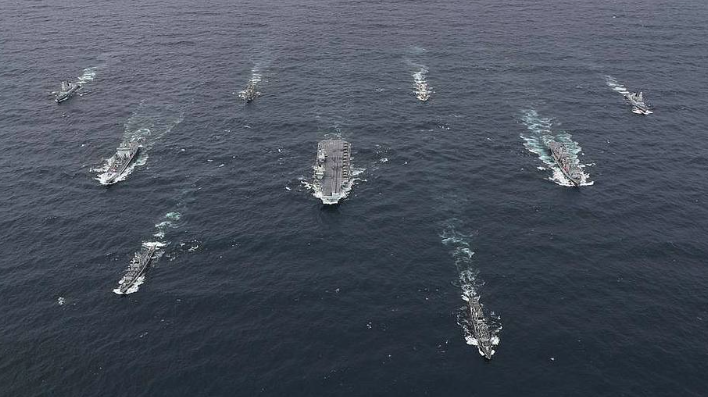
The Red Sea crisis has settled into an uncomfortable new normal. While the initial shock caused by the use of anti-ship ballistic missiles (ASBM) has faded, the strategic implications of the Houthi campaign remain dangerously under-analysed in the context of future British Naval Doctrine. For the Royal Navy, the conflict would appear to cast a shadow over amphibious operations in littoral waters, where both the Carrier Strike Group (CSG) and the Littoral Response Groups (LRGs) are expected to conduct their operations. The Houthi campaign has inadvertently provided an example of a scalable, repeatable model of sea denial that fundamentally challenges the operating and financial rationale of Western naval power projection.
The Houthi Model involves the integration of sensors and shooters at the state level with the expendability and mass of non-state actor operations. This model poses a significant challenge for the Royal Navy, which relies on low-density, high-value assets.
The Tyranny of the Cost-Exchange Ratio
The frightening mathematics of modern air defence are grounded in the lessons learned from the Bab el-Mandeb Strait. In the first few months of the Red Sea conflict, British destroyers, notably HMS Diamond, excelled at shooting down wave after wave of hostile tracks. However, there was an unsustainable price to pay.
The Houthis’ Shahed-136 derivative costs approximately $20,000. The missile required to intercept it, an Aster-15 or Sea Viper, costs at least £1 million. While individual engagements can be justified by the value of a destroyed merchant vessel or a destroyer providing escort, the economics of sustained engagement are financially disastrous.
This creates a magazine depth problem that the CSG must confront. A Type 45 Destroyer has 48 vertical launch (VL) silos. In a saturation attack scenario, precisely the type the Houthi Model promotes, a destroyer may expend its entire primary magazine in minutes, shooting down targets costing its adversary less than a basic rigid-hulled inflatable boat (RHIB). It should be noted that at present, the Royal Navy can not replenish a surface vessel’s VL silos whilst at sea.
Should the UK CSG deploy to the Indo-Pacific, it would face the People’s Liberation Army Navy (PLAN). However, the Houthi Model demonstrates that the PLAN need not risk its own high-value hulls to mission-kill a Queen Elizabeth-class carrier. It only needs to provide a proxy or ‘maritime militia’ swarm with sufficient cheap, attritable effectors to force the CSG to exhaust its magazines. Once the escorts are out of ammunition, the carrier becomes operationally irrelevant, forced to withdraw without a single capital ship being sunk.
The Littoral Response Group in Crisis: The Decommissioning Dilemma
The consequences for the Littoral Response Group could be the most profound. The current construct envisions the use of Bay-class and Albion-class vessels in the littoral zone to conduct ‘raids’ and achieve ‘strategic effects’ via the force insertion of Commandos. However, the basis for such an operational construct has now fundamentally changed.
In March 2025, the Ministry of Defence undertook the decommissioning of HMS Albion and Bulwark, the Royal Navy’s two Albion-class landing platform docks. This was an exercise in cost-cutting that has resulted in a major capability gap. This capability gap now exists at a time when there is a considerable change in the doctrine surrounding amphibious operations. Albion-class vessels were designed to deliver amphibious landing forces at the brigade level. Their absence means that the Royal Navy has to rely on three Bay-class Landing Ship Docks, vessels that are already under considerable pressure due to crewing deficits within the Royal Fleet Auxiliary.
The capability gap is significant, as there are now no Bay-class vessels available to conduct sustained operations. With the Albion-class now retired, the capability deficit is pronounced. The lightweight, agile raiding operations that the Future Commando Force and Littoral Response Group concept envisage are now highly at risk, deprived of the necessary supporting amphibious shipping.
Current Doctrine and Its Vulnerabilities
Current doctrine assumes the LRG, because of its mobility and low signature relative to a carrier, can operate inside the adversary’s Weapons Engagement Zone (WEZ). The Red Sea experience comprehensively shreds this assumption. The Houthis have demonstrated that with commercial-off-the-shelf (COTS) maritime radars and intelligence, surveillance, and reconnaissance (ISR) derived from simple drones, they can maintain a kill chain against surface vessels hundreds of kilometres offshore.
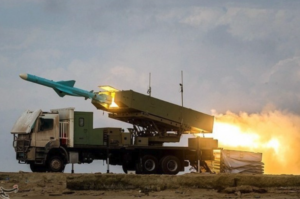
The Houthis field a number of Iranian-supplied anti-ship missiles, such as this Noor missile.
If a non-state actor such as Yemen can deny sea control to US Navy destroyers, how can a lightly-armed LRG that lacks organic area air defence survive in the littorals of a peer adversary? The LRG assumes a level of permissive sea control that no longer exists. Protecting an LRG off a hostile coastline now requires a level of air defence escort that the Royal Navy simply does not possess in sufficient hull numbers. Without that protection, the LRG is not a strike force; it is a target.
The MRSS Imperative: Bridging the Capability Gap
In November 2021, as part of the UK’s Defence White Paper, the Royal Navy Multi-Role Strike Ship (MRSS) program was formally announced and funded in May 2024. It outlines the acquisition of 5-6 new vessels. The MRSS aims to address the lack of amphibious vessels within the Royal Navy and will replace the Albion class, the RFA Argus vessels, as well as the Royal Navy Bay-class vessels, which are set to become obsolete by 2024.
The MRSS program is still in an early stage; it has only just entered the assessment phase, and the first vessels are not expected to be operational for 5-10 years, and initial operational capability is not expected to be achieved before 2031. This means the Royal Navy will be required to operate with a significant shortfall of amphibious shipping to remain aligned with the Future Commando Force doctrine. The vessels will be expected to conduct the following:
- Support the Royal Marines’ specialist amphibious operations with enhanced protection against the “Houthi Model” threats
- Provide organic area air defence capabilities currently absent in Bay-class vessels
- Sustain independent littoral operations without reliance on external air cover
- Integrate new technologies, including uncrewed systems and containerised strike capabilities, through the planned Commando Insertion Craft (CIC) and Commando Utility Craft (CUC)
- Maintain the Royal Navy’s ability to project power across the Indo-Pacific and other contested littoral zones
Yet the gap between aspiration and capability remains acute. The MRSS must be designed to operate in an environment where saturation attacks and ballistic threats have become normalised, requiring levels of organic protection far exceeding current amphibious platforms.
Rethinking the Threat: The ASBM Factor
Before the Red Sea crisis, the ASBM threat was considered mostly imaginary, especially in relation to the Chinese DF-21D system. The Houthis have made this threat real.
The Royal Navy has only a small range of capabilities to intercept ASBM attacks, primarily the Aster 30 Block 1 interceptor, of which a small number exists. Technology such as this cannot be un-invented. While the UK prepares to deploy its future carriers, the strategy must be grounded in the expectation that a Houthi Model ASBM will be available to States around the Black Sea, South China Sea, and West Africa.
This proliferation of ASBM has a profound effect on the risk calculus for the further operation of aircraft carriers. A carrier could, in the past, confidently place itself within a 200 nm zone from the coast, being relatively sure that there are no coastal artillery/short/medium range missiles. The Houthi Model requires a repositioning to 500 nm. This, of course, affects the range from which the carrier can sustain F-35B employment for air/ground support, the number of sorties, and the overall size of the operation. The littoral zone of conflict has paradoxically shifted further out to sea.
Automation as the Counter-Measure
How should the Royal Navy adapt? The answer lies in breaking the cost curve. The Navy cannot shoot down $20,000 drones with £1 million missiles. Rapid advancement to directed energy weapons (DEW) and automated close-in defence systems is essential.
DragonFire, the UK’s directed energy weapon, is no longer a future capability aspiration; it is an urgent operational requirement. The future MRSS must possess organic, deep-magazine defence at pennies per shot cost.
The Royal Navy must also seize the Houthi Model’s offensive aspect. Merely defending is not enough. An LRG equipped with hundreds of cheap drones would be more effective and have a higher survival rate than one trying to land Royal Marines on a contested beach. The uncrewed Commando Insertion Craft and drones are steps toward achieving this capability, but development timelines must be accelerated.
Conclusion
The Houthi operation is the first of what will likely be several engagements demonstrating advanced forms of combat democratisation. It serves to prove that sea control, even against a powerful, conventionally equipped navy, will always be contested. The savings attributed to the decommissioning of Albion and Bulwark may make financial sense, but it that decision has left the Commando Force in a temporary state of atrophy at a time of important doctrinal transition for the Royal Navy’s amphibious force.
The message to the UK is clear and unequivocal. The era of benign littoral manoeuvre has ended. The MRSS program should be accelerated, and capability gap-filling solutions put in place. If the Royal Navy does not revise its protection strategies to deal with mass, saturation, and ballistic threats in a cost-effective manner, its most expensive ships will be nothing more than able, though passive, observers.

Khiyati Singh
Khiyati is a Research Analyst, Centre for North America and Strategic Technologies, Manohar Parrikar Institute for Defence Studies and Analyses, New Delhi.