
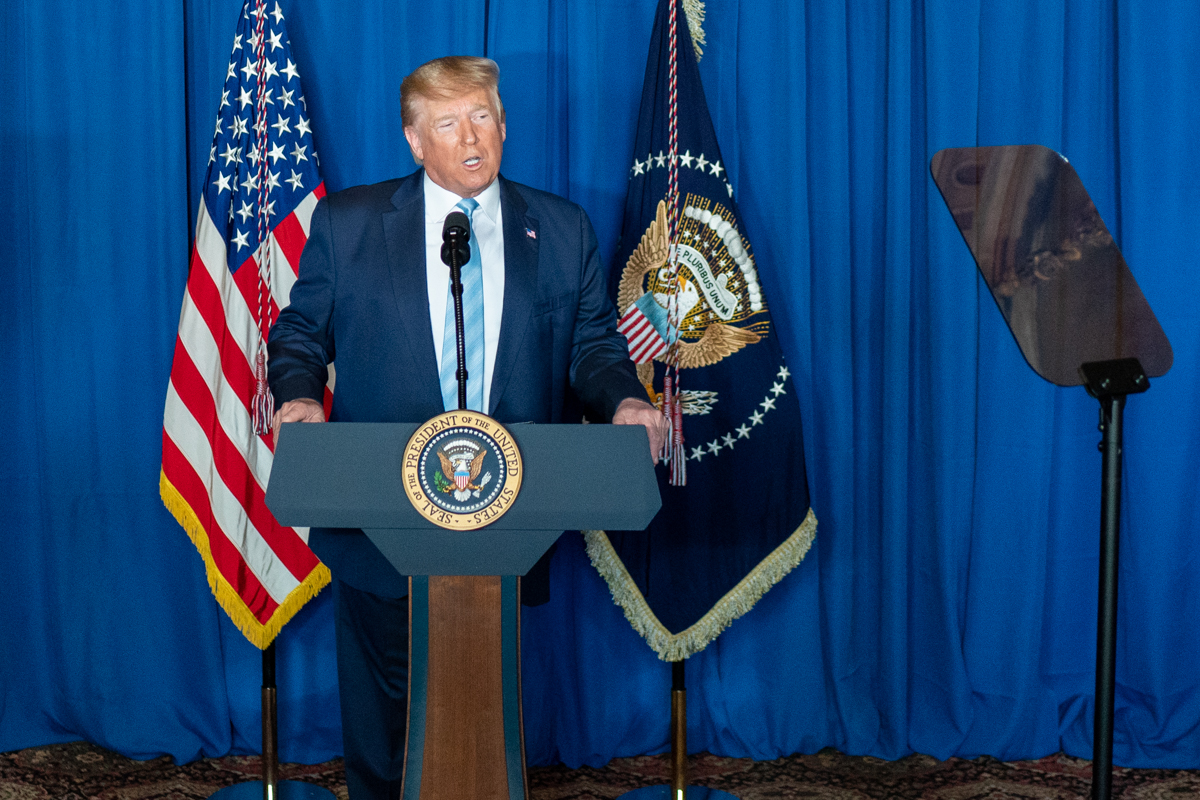
Britain’s Decision to Refuse the use of its Air Bases for Operation Epic Fury
Damn with faint praise, assent with civil leer, And without sneering, teach the rest to sneer; Willing to wound, and yet afraid to strike, Just hint a fault, and hesitate dislike.
When explaining his reaction to American requests to use RAF airbases in the early phases of Operation Epic Fury, Britain’s Prime Minister, Sir Kier Starmer presented himself as an honest and trustworthy, but independently minded, ally of America. This approach was entirely consistent with his excruciatingly transparent faux attempts at bonhomie with President Donald Trump, epitomised by his inauthentic fawning to the American leader whenever the two meet on the world stage. Starmer, it seems, wanted to maintain the illusion of Britain’s commitment to ‘the special relationship’ with America, while separately forging a pathway to closer political, economic and military relations with the European Union. Unfortunately for Starmer, the subterfuge began to unravel when Israel and America decided to attack Iran. The war has exposed the obvious antipathy with which Trump is held by many ministers in Starmer’s Labour government Cabinet. Consequently, the requests for permission to use RAF Fairford and the jointly operated Diego Garcia airbase, as launch pads for American missions against the cruel, murderous and belligerent Iranian theocracy, were refused. Since then, the British have attempted to explain away the rationale for the initial rejection as a consequence of government’s desire to adhere to an ethical and coherent foreign policy, designed to satisfy Britain’s national interests. The Attorney General, Lord Richard Hermer, the architect of the initiative to give the strategically important Indian Ocean island base, Diego Garcia, to China-friendly Mauritius, adjudged that permitting the launch of attacks from British territory, without a sufficiently robust reason for doing so, would break international law.1Understandably, the American administration was not impressed. Pete Hegseth, the United States Secretary of War expressed his frustration at the decision thus:
Capable partners are good partners. Unlike so many of our traditional allies who wring their hands and clutch their pearls, hemming and hawing about the use of force. 2
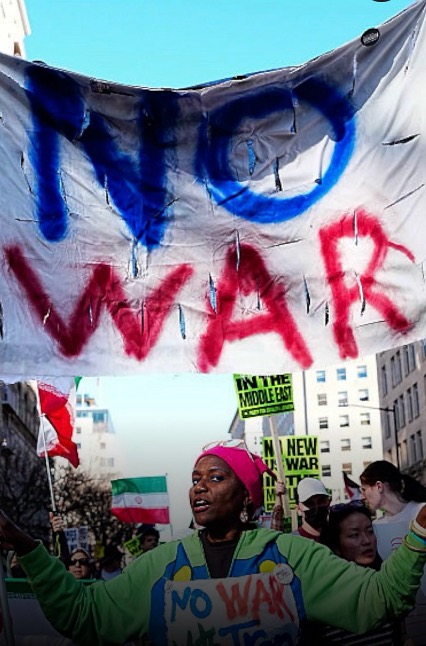
Nevertheless, many, if not most, of Britain’s mainstream media outlets expressed broad sympathy with Hermer’s understanding of the legitimacy of the attacks on Iran, with a routinely positive spin on appraisals of Starmer’s desire to adopt an ethical approach to the country’s foreign policy dilemmas.3 The population were similarly influenced. At Prime Ministers Questions in the House of Commons on 4 March, Starmer appeared enthused by polling undertaken three days earlier, which appeared to vindicate the popularity of the stance the government had taken. He confidently argued that the emphasis on defence, rather than attack, would help keep us safe, and thereby safeguard our ‘national interests’. This approach certainly resonated with the nation’s pacifists, who are inclined to believe that war has no justifiable basis, as well as with those who are instinctively anti-American, and/or anti-Trump. Starmer wasn’t prepared ‘for the UK to join a war unless’ he was ‘satisfied there was a lawful basis and a viable thought-through plan’ to enact it.’4 This assessment, of course, implied that the evidence presented to senior ministers in the National Security Council (NSC) meetings did not indicate that Iran was close to procuring a nuclear weapon and that other nefarious concurrent activity Iran routinely undertook against western interests, which might have met the threshold necessary to satisfy a more robust response, was not imminent. Nonetheless, Starmer’s statement to the House of Commons suggested that if other evidence had been forthcoming, or that other coordinated activities across the globe might soon occur to delay, deny and paralyse an effective response to say, an invasion of Taiwan, the bar of legal legitimacy needed to justify pre-emptive strikes against Iran might been reached or even exceeded.
In essence, Starmer’s Cabinet was invoking the lessons identified by the Chilcot Inquiry into the 2003 invasion and subsequent occupation of Iraq. In doing so, they appear to have overlooked the equally relevant unintended consequences of pacifism in England in the 1930s. At that time, when the horrors of the First World War (think Afghanistan 2001 and Iraq 2003) were still a recent memory for many living adults, there was widespread antipathy about rearmament and almost no support for Britain’s involvement in another major war.5 David Reynolds has described how the resultant peace movement saw 407,000 people join the League of Nations Union and another 118,000 join the Peace Pledge Union. Such large numbers of overtly peace-focused voters influenced the British establishment to appease rather than confront the emergent fascist and communist dictators.6 In doing so, they were merely reflecting the mood in the country. The undergraduates at Oxford University in 1933, for instance, voted overwhelmingly for a ‘Joad Resolution’: the intention not fight for King and Country in any future war. Though the students thought they were emphasising their desire for peace Benito Mussolini thought otherwise. He deduced that the vote provided a credible indicator of Britain’s martial decline, with the result that he increased his belligerence.7
What evidence did the Cabinet consider before responding to the American request to use British bases, and presumably to request British assistance in the forthcoming air and space campaign against Iraq? According to David Stokes, the Iranian regime has become a structural component of Chinese strategic architecture, with China the largest market for Iranian oil. Some seventy per cent of the oil it burns comes from Iran, carried in shadow fleets of tankers, secured at prices negotiated below market rates.8 Stokes argued that the China has accumulated enough cheap Iranian oil to provide the regime with reserves necessary to sustain their economy for around a hundred days, which might just be enough time to mitigate the effects of any American-led Pacific naval blockade. Iran has also acted as a Chinese proxy in the Middle East, bogging down American and British forces in Afghanistan, Lebanon and Gaza, which has helped reduce the intensity of the spotlight on Chinese objectives in the Far East. China’s main foreign policy objective, since 1978, has been to ‘return Taiwan to the motherland’. Xi Jinping directed the People’s Liberation Army to be ready to take control of the island by 2027, despite the much less threatening date of 2049 being touted as the strategic target by which this aspiration should be accomplished.9 In the weeks before the American and Israeli strikes, Reuters reported that Iran was about to finalise a deal with China for CM-302 supersonic anti-ship cruise missiles, which could have been used to strangle the flow of oil through the Straits of Hormuz.10 Reports in the American media suggest that China has also supplied Iran with DF-17 hypersonic missiles and other dual-use components, which may have helped it to modernise and reconstitute its missile production lines. 11 Moreover, the increasingly routine joint naval exercises between China, Russia and Iran in the Straits of Hormuz, have seen Iran switch from using GPS to the Chinese BeiDou navigation system. If these factors were briefed to the NSC members before they considered the American request they, like most of the mainstream news media editors, were unconvinced that Iran was creating a form of anti-access architecture in the Straits of Hormuz to constrain the West’s freedom of action if the Chinese attempted an assault on Taiwan.12 Interestingly, Trump was scheduled to travel to China to meet Xi Jinping at the end of March, though the visit has now been rescheduled to May.
Media outlets’ have expressed a fair amount of cynicism about the real reasoning behind the American and Israeli attacks, and have been keen to identify inconsistencies between the assessment the US intelligence community made in March 2025, that Iran was ‘not building a nuclear weapon’, and the subsequent airstrikes that June targeting Iran’s nuclear programme, after which Trump said they were ‘obliterated’.13 Before that attack, the Israeli Prime Minister Benjamin Netanyahu told the BBC that ‘if not stopped, Iran could produce a nuclear weapon in a very short time.’ Consequently, serious doubts about the imminence of Iran procuring a nuclear weapon or of attacking other Gulf States in the region were trotted out by regional ‘experts’ on TV news channels.14 Kelsey Davenport, director for non-proliferation policy at the US-based Arms Control Association, said that Netanyahu ‘did not present any clear or compelling evidence that Iran was on the brink of creating such a weapon.’ As far as she was concerned Iran did not have enough fissile material to produce one bomb before she reiterated the US intelligence assessment that Iran was not building a nuclear weapon. Indeed, in March 2025, Tulsi Gabbard, the Director of National Intelligence, advised the US Congress that although Iran’s stockpile of enriched uranium was ‘at its highest level’, which was ‘unprecedented for a state without nuclear weapons’ it was still understood that Iran was not building a nuclear weapon because, supposedly, Ayatollah Ali Khamenei had not authorised its production.15 Consequently, when the Trump and Netanyahu administrations justified the attacks on the basis of the imminence of the nuclear threat from Tehran the BBC’s Ros Atkins queried the veracity of what Trump, Marco Rubio, the US Secretary of State and Hegseth had claimed.16 Raphael Grossi, the head of the International Atomic Energy Agency (IAEA), told the BBC, in June 2025, that, while he could not verify Israeli claims, he accepted that the Iranians had made ‘concrete progress’ in their efforts ‘to produce weapons components adapted for a nuclear bomb.’ These included a uranium metal core and a neutron source initiator for triggering the nuclear explosion. He also acknowledged that the IAEA’s May 2025 report warned that Iran had amassed enough uranium with a purity just short of that necessary to make nine nuclear bombs. 17 On 4 March this year, however, the American administration gave journalists a briefing on the alleged imminence of the Iranian production of a nuclear weapon, for which, they claimed, all the necessary capability had now been achieved. Interestingly, Grossi’s position had also changed. He now told reporters that Iran’s ‘large stockpile of near-weapons-grade uranium, together with its refusal to grant his inspection full access was a cause for serious concern. For these reasons he said that unless Iran assisted the IAEA in resolving the outstanding safeguarding issues he could not provide any assurances that Iran’s nuclear programme was exclusively peaceful.18 Ultimately, of course, our political leaders are responsible for discerning the reality from the rhetoric.
Resultant British Grand Strategy, Strategy and Politics
Air campaign plans for major warfighting can take a significant amount of time to produce. It takes months to formulate a coherent and coordinated plan, where the assumptions are usually exercised and tested in synthetic or physical environments to evaluate the outcomes. The planning for Operation Iraqi Freedom (OIF), for instance, began in March 2002, although Royal Air Force (RAF) and Royal Australian Air Force (RAAF) personnel only became involved in the planning phase in September 2002, long after the main part of the conceptual planning phase had been conducted. Indeed, the first action of OIF occurred on 20 March 2003 almost a year after planning began. It is in this context that the date when the British government became aware of American intentions in the region and when, and indeed if, British military personnel were involved in the planning is pertinent. All of which leads us to consider how much the members of the government’s National Security Council (NSC) are likely to be influenced to decide what role, if any, British forces ought to have played in Epic Fury. The military historian, Sir Michael Howard, defined grand strategy as ‘the mobilisation and deployment of national resources of wealth, manpower and industrial capacity, together with the enlistment of those of allied and, when feasible, of neutral powers, for the purposes of achieving the goals of national policy in wartime.’ 19 In recent years, as Sir Graham ‘Jock’ Stirrup, the Chief of the Defence Staff, made clear in 2012, elements of the British defence establishment have lost the capacity to think strategically.20
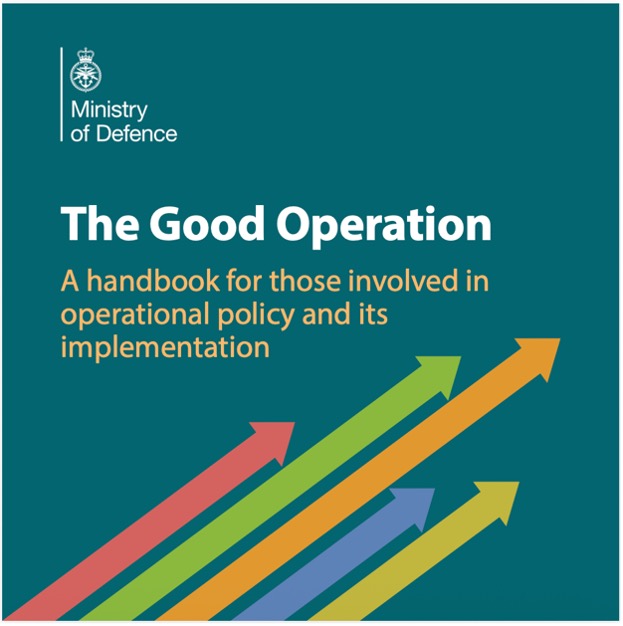
To inform the Cabinet’s decision-making in the run up to any major operation, ministers are advised to read a document that emerged in the aftermath of ‘The Report of the Iraq Inquiry’, produced by Sir John Chilcot and his team, which evaluated the lessons from the British involvement in Iraq. ‘Chilcot identified ‘a propensity for ‘groupthink’ – when a group of people conform in their thinking to the extent that their decision-making has an irrational or dysfunctional outcome; reflecting insufficient challenge and a lack of diversity of thought.’ His report also identified that many of the Operation Telic decision-makers didn’t properly understand what they were committing forces to do, and lacked the foresight to anticipate how events might develop.21 On 2 March, Calvin Bailey, the Labour MP for Leyton and Wanstead in London, a former RAF air transport pilot, told MPs who did not have the benefit of his military experience that the government’s decision to avoid committing British forces to do anything other than as little as possible was the right decision: ‘In March 2003 I flew combat missions into Iraq. I want to thank you, Prime Minister, for doing right by our service personnel.’ The same day, when Bailey was interviewed by the BBC 5 Live Drive team, he told the audience that The Good Operation Guide (sic) had been written to assist decision-makers know what things they ought to consider if they are going to make a political decision to commit to a major military operation that puts soldiers in harm’s way. In essence The Good Operation was intended to prompt its readers to consider a checklist of apposite questions, to prompt discussion amongst members of the NSC, in order to prevent avoidable errors and to illuminate potential risks and opportunities of engaging in military action, before the final authority to approve such operations was taken. It asks some overtly political questions, such as: How will the UK’s reputation emerge from the operation? … What will be the judgement of history? …. Is the vision shared with local partners, and what will their role be? … and … Will it change the world order for the better?
All of which would be fine and dandy, if those making the decisions are able to evaluate the situation without being overly influenced by the dark shadow of the Labour government support for the American-led invasion of Iraq in 2003. What is unusual about the recent NSC discussions is that the nature of the discussions, if not the classified content, has been leaked. Disagreements between those attending NSC meetings rarely enter the public domain until Public Inquiries evaluate what went wrong and what, if anything, went right. We now know, for instance, that the government was acutely aware of the imminence of the American and Israeli attack. Starmer told MPs in the House of Commons and journalists at a press conference the transfer of ‘fighter jets, air defence missiles, advanced radar and systems to take down drones’ had been dispatched to Cyprus and Qatar in January and February ‘to ensure’ British forces ‘were in a heightened state of readiness’.22 It has also been suggested that other military assets were withdrawn. Apparently, American officials only formally asked the British government for permission to use Diego Garcia and other British air bases on 11 February. We also know that the NSC met on 28 February to discuss the government’s official response. One wonders what was going on in the intervening sixteen days! It is unlikely that the ministers who were scheduled to attend the NSC did not have knowledge of the American aims and intentions for the campaign as these are a core element of any air campaign plan. On 28 February, Daniel DePetris told the readers of The Spectator Trump’s exposition of the aims, and on 2 March these were repeated, almost verbatim, by Hegseth:23
- Destroy Iranian offensive missiles.
- Destroy Iranian missile production.
- Destroy their navy and other security infrastructure.
- Deny their access to nuclear weapons.
Trump and Hegseth may have urged the Iranian people to take advantage of the situation by reclaiming their country and overthrowing their own government, but they made clear that regime change was a broad aspiration, not a specific mission objective. Moreover, an American plan to elicit regime change would have required the deployment of significant numbers of ground troops to the region, which does not appear to have happened. Yet, media outlets do not seem to have realised this. Indeed, the clarity of the language used to articulate the mission objective has evaded the BBC’s and Sky’s regional experts. When Jeremy Bowen was interviewed by Sarah Montague on BBC Radio 4 on the World at One, on 4 March, she said ‘There have been conflicting messages about … what the aims of this war is, and in a way you need to know that before you know how long is it going to go on?’ To which Bowen answered:
Yeah you do, and the problem is we don’t really quite know what the aims are because they are saying different things, I think it is absolutely safe to say that either … certainly in my time or recording these things, which goes back in terms of big American military activities down to the First Gulf War in 1991 after the invasion of Kuwait, I’ve never seen such a chaotic start to a war and seemingly ill thought out in terms of what its objectives are supposed to be.’
A Ros Askins piece the same day told his audience ‘the president and his top officials have offered varying explanations for its actions in the war with Iran.’24 One wonders if our national broadcaster is deliberately misinforming the public about the clarity of Trump’s mission aims and objectives.25
Bowen is not the only journalist to have been conditioned to think all wars America undertakes should follow the tightly-controlled rules-based model they have been witness to, where kinetic activity has been severely constrained by politically influenced rules of engagement. At the press conference on 2 March Hegseth made clear that the American military would not be obliged to abide by overly restrictive rules of engagement in Epic Fury. Unapologetically, he told the audience ‘no stupid rules of engagement, no nation building quagmire, no democracy building exercise, no politically correct wars.’ Presumably the more broadly interpretable laws of armed conflict will be adhered to religiously, but otherwise the military has been given a free hand. The intent behind the message was probably part of the plan to frighten the Iranian leaders into adjusting their reaction to the American assault. Whether or not this explains their decision to attack other Gulf States is, as yet, unknown.
Left of centre commentary on Hegseth’s comments provides a fascinating insight into the way their value judgements are formed. Former left-leaning BBC journalists, Jon Sopel and Lewis Goodhall, who together with Emily Maitlis set up a highly successful left-of-centre political podcast and website The News Agents, were appalled by Hegseth response to the losses suffered by the Iranian navy, thinking his evident bloodlust was both cruel and crude.26 Not only did The News Agents characterise the Iranian navy sailors as soldiers, they did not appear to appreciate that Hegseth had simply decided to reverse the vector of restrictive covenants that have limited the use of force war for the last thirty-five years.27 For those in the media, conditioned to expect wars to be conducted in a way that causes zero civilian casualties, this was especially shocking. Consequently, when Hegseth told the media that the American military were hitting the Iranians ‘surgically, overwhelmingly and unapologetically’ and that ‘with every passing day our capabilities get stronger and Iran’s get weaker’ he was merely alluding to how the campaign planners expected the outcome of the fight (Lanchester’s N-Square Law) to evolve. The methodology also provided a hint about the expected timeline, but those listening didn’t seem to notice.
With all of the preceding in mind, when the NSC met on 28 February, the attendees knew that Iran was ‘the biggest state sponsor of terrorism globally’ and that ‘over the last year alone’, the Iranian regime had ‘backed more than 20 potentially lethal attacks on UK soil’. Nonetheless, the consensus amongst the attendees was that it was not legal to become involved in the initial strikes, as the UK was not under imminent threat from Iran.28 The legal advice offered by Lord Hermer, it appears, was not considered as guidance, but rather as direction. The leaker of the details of the NSC meeting also revealed that whereas Starmer was minded to approve the American requests, many of his Cabinet colleagues were not. Objections ranged from the decidedly petulant, pacifist, anti-Trump, anti-war views of Edward Miliband, the Secretary of State for Energy Security and Net Zero, to the more widely-held Foreign Office perspective: that Britain should encourage the Americans to de-escalate and negotiate with Iran with the aim of persuading them to abandon their nuclear weapon ambitions, as if that was the only threat to be considered. Following these discussions, the Americans were refused permission to use RAF airbases for offensive operations.
Since then, most of the ministers in Starmer’s Cabinet have expressed their belief that they made the right decision and, referencing the legal advice on international law from Lord Hermer. They were convinced that they had acted ethically. They also appeared rather pleased that they had stood up to Trump, as they knew this would appeal to their support base. Importantly, they would imagined they would never have to answer for agreeing to an operation defined by bombast and ‘false claims’ of imminent threat, Labour’s did when it support the Iraq War of 2003. On 3 March, with a sense of renewed confidence, Starmer told the media that the government ‘does not believe in regime change from the skies’. The plight of the Iranian population; the threat to the supply of oil from the Middle East, and the need to help avert the danger of a Chinese attempt to invade Taiwan was clearly thought less important. Unfortunately, in terms of the machinations of grand strategy, the decision taken has not aged well. One of the questions The Good Operation asks decision-makers ‘Is the vision shared with local partners, and what will their role be?’30
In response to this new operational reality, Starmer’s ministers reconvened, before agreeing to allow American aircraft to use RAF bases to fly over Iran and destroy the capabilities and the missiles and drones that had attacked British interests and Britain’s allies in the region. The message Starmer has since been keen to impart is that the government intended to focus on ‘calm, level-headed leadership in the national interest’ framed by its values and its principles ‘no matter the pressure to do otherwise’, which implied that it had not yielded to American pressure to change its mind, only decided to act in defence of its regional allies.31Starmer then concocted the argument that the attacks his government had now allowed the Americans to undertake against Iranian missile and drone capabilities were, in fact, wholly defensive in nature. The leader of the Conservative opposition, Kemi Badenoch, was having none of this. She characterised the government’s strategy as belatedly catching arrows, rather than killing the archer.32 Significantly, by 1 April Starmer’s refusal to respond to American requests to help keep the Staits of Hormuz open had morphed into him leading a meeting with European and Gulf countries, when he acknowledged that making the straits ‘accessible and safe after the fighting has stopped…. will not be easy’ but was in the UK’s national interest.33
Open source intelligence has reported that by the end of the first week of the war the Iranians had launched roughly 585 ballistic missiles and 1,522 drones, with forty per cent of missiles targeting Israel. The United Arab Emirates (UAE) and Kuwait, both British allies, were also primary targets, with 189 ballistic missiles and 941 drones fired towards the UAE alone. Some 178 ballistic missiles and 384 drones were fired at Kuwait. Fortunately, under ceaseless attacks from American and Israeli air power capabilities, Iran’s missile and drone salvos have declined by around ninety per cent by 1 April. Early in the conflict, Iranian President, Masoud Pezeshkian, apologised for the Iranian strikes on the Gulf States before backtracking after criticism from other Iranian leaders.34
Conclusions
It appears that taking an ethical approach to foreign policy has been more difficult than the Labour government imagined. The original decisions taken by the members of the NSC on British participation in Epic Fury were clearly framed by political appreciations of the way Britain’s decision to absent their military from the fight would play out, framed by naïve interpretations of the regional dynamics and by either poor, or misguided, intelligence estimates of how Iran would respond. The members of the NSC appear to have been keen to be seen to be ‘on the right side of history’, which coalesced with the intrinsic distaste by many of them of Donald Trump. In response, Trump railed that Starmer was no Winston Churchill, which was a little unfair because he had beem the most hawkish of the NSC’s attendees. A few days later, Trump also accused the British government of ‘seeking to join wars after’ they’ve already been won.35
Unsurprisingly, this presentation of events has appealed to large swathes of Starmer’s left-of-centre support base. He managed to distance himself from Trump; suggested he is acting in the British national interest, with calm level-headed decision-making, and has explained away the lack of foresight into Iranian regional intentions by coming up with the confection that bombing attacks undertaken by the Americans supplement the air defence units the government belatedly sent to the region. In the Second World War, Winston Churchill made the brutal and truly heinous decision to sink or disable large parts of the Marine Nationale (French navy) in 1940, when France’s surrender to Hitler’s Germany was imminent. France was still our ally, so the decision to sink or disable the French fleet at Mers El Kébir would never have satisfied the exigencies of international law as we now understand them. If this decision has not been taken, the Royal Navy might have lost its dominance in the Mediterranean, and Malta and even Egypt may have been lost to the Axis powers with grave consequences for the Allies chances of winning the war in Europe. Perhaps, the NSC ought to conduct a paper exercise, using the Mers El Kébir scenario and The Good Operation guide to help the attendees understand that in the world of international conflict making the right decision does not mean thinking the ‘do nothing option’ will stand the test of time.

David Stubbs
In his RAF career David Stubbs served as rear crew on maritime patrol and airborne early warning aircraft. During his exchange tour with the United States Air Force (USAF) he deployed to Turkey to fly in operations over northern Iraq. After returning to the UK, he deployed again to oversee operations in Iraq and Afghanistan, at Prince Sultan Air Base, Saudi Arabia. After completing another tour, as a flt cdr on the E-3D, he deployed to Afghanistan before teaching at the RAF’s Air Warfare Centre, on the Higher Air Warfare and Air Battle Staff courses. After completing a Master of Arts in Air Power: History, Theory and Practice at the University of Birmingham, a version of his thesis was published in the Journal of Military History. Articles and a chapter have followed in the RAF’s Air Power Review, Canadian Military History, Journal of Military History and in the book ‘The Culture of Military Organizations’.
- David Stubbs

- David Stubbs

- David Stubbs

- David Stubbs
Footnotes
- Eliot Wilson, Iran has shown how naive Keir Starmer truly is, 3 March 2026, https://spectator.com/article/iran-has-shown-how-naive-keir-starmer-truly-is/
- Pete Hegseth, Press Conference on Operation Epic Fury, 02 March 2026. https://www.youtube.com/shorts/VmqbT_vGuNI
- Henry Zeffman, International law ‘at heart’ of Starmer’s foreign policy, says Hermer, 24 June 2025, https://www.bbc.co.uk/news/articles/c3354d5j8jzo
- Matthew Smith, UK public opinion on the US-Iran conflict, 05 March 2026, https://yougov.com/en-gb/articles/54243-uk-public-opinion-on-the-us-iran-conflict Britons opposed attacks were 49%, whereas only 28% supported the attacks.
- Richard Overy, Blood and Ruins: The Great Imperial War 1931-1945 (London: Penguin, 2023), 70.
- David Reynolds, The Long Shadow: The Great War and the Twentieth Century (London: Simon & Shuster,2013), 217-223, 227, 243
- Winston Churchill, The Second World War: Volume 1 The Gathering Storm (London: Cassell, 1948), 152.
- Geoffrey Cain, The greater game: Trump’s ultimate target in this war is China, 7 March 2025, https://spectator.com/article/the-greater-game-trumps-ultimate-target-in-this-war-is-china/
- President Lai holds press conference on national security action plans to safeguard democratic Taiwan, 26 November 2025, https://english.president.gov.tw/News/7048
- John Irish, Parisa Hafezi and Gavin Finch, Exclusive: Iran nears deal to buy supersonic anti-ship missiles from China, 24 February 2026, https://www.reuters.com/world/china/iran-nears-deal-buy-supersonic-anti-ship-missiles-china-2026-02-24/
- Professor Michael Clarke, Is this the real reason behind Donald Trump’s decision to attack Iran? 24 March 2026, https://news.sky.com/story/send-in-your-questions-for-iran-war-qa-with-michael-clarke-today-13514614
- Doug Stokes, Why the Iran war is really about China, 4 March 2026, https://spectator.com/article/why-the-iran-war-is-really-about-china/
- Aaron Blake, Trump said Iran’s nuclear program was ‘obliterated.’ So why is he looking to strike again? 24 February 2026, https://edition.cnn.com/2026/02/24/politics/nuclear-program-iran-trump-strike
- Sky News, Claims Iran was weeks away from making a nuclear weapon was pure fabrication, 5 March 2026 https://www.youtube.com/watch?v=oG2vDcBigAk
- David Gritten, Was Iran months away from producing a nuclear bomb?, 18 June 2025, https://www.bbc.co.uk/news/articles/cn840275p5yo
- Ros Atkins, Trump’s war on Iran: Shifting stories and unanswered questions, 4 March 2026, https://www.bbc.co.uk/news/videos/cd6zzyg64zqo
- Gritten, Was Iran months away from producing a nuclear bomb?
- Mark Stone, Was Iran ‘days’ from nuclear weapons? 4 March 2026, https://news.sky.com/video/share-13514912
- Michael Howard, Grand Strategy, vol. 4 , August 1942 – September 1943 (London: HMSO, 1972), 1
- Sir ‘Jock’ Stirrup, Chief of the Defence Staff Annual Lecture, Royal United Services Institute, 3 December 2009.
- The Chilcot Team, The Good Operation: A handbook for those involved in operational policy and its implementation (Ministry of Defence, 2017), 5, 7.
- Sir Kier Starmer, Prime Minister Questions: Answer to Leader of the Opposition question about Britain’s lack of proactive response to the crisis in Iran, 4 March 2026. Press Conference on Iran War Escalation & Britain’s Response, The Downing Street Press Briefing Room, 6 March 2026.
- Daniel DePetris, The US and Israel launch a major attack on Iran, 28 February 2026, https://spectator.com/article/the-us-and-israel-launch-a-major-attack-on-iran/ Pete Hegseth, Press Conference Operation EPIC FURY, 02 March 2026, https://www.youtube.com/shorts/VmqbT_vGuNI
- Ros Atkins, Trump’s war on Iran: Shifting stories and unanswered questions, 4 March 2026, https://www.bbc.co.uk/news/videos/cd6zzyg64zqo
- Gordon Rayner, Nine Ways the BBC misled viewers over Trump, Daily Telegraph, 3 November 2025. The BBC has history in this regard, Noor Nanji, BBC apologises to Trump over Panorama edit but refuses to pay compensation, 13 November 2025, https://www.bbc.co.uk/news/articles/c874nw4g2zzo An on-going law suit by Trump against the BBC might lead to job losses at the BBC.
- Michael Baggs (with Jon Sopel & Lewis Goodall), The ‘repellent bloodlust’ of Pete Hegseth celebrating killing 100 Iranian soldiers, 5 March 2026, https://www.thenewsagents.co.uk/
- Thomas Tugendhat and Laura Croft, The Fog of Law, Policy Exchange, 2013, 14-22.
- Imogen James, Four arrested on suspicion of assisting Iran’s intelligence service, 6 March 2026, https://www.bbc.co.uk/news/articles/cz6e7g96890o Tim Shipman, ‘Whose side are you on?’: How Keir Starmer alienated Britain’s allies over Iran, 7 March 2026, https://spectator.com/article/whose-side-are-you-on-how-keir-starmer-alienated-britains-allies-over-iran/
- Chilcot Team, The Good Operation, 18. Their role, we now know was to be the subject of Iranian missile and drone attacks. Perhaps the intelligence did not imagine that Iran might target the American launch bases on the territory of the Gulf States, or perhaps no one had the strategic vision to say this was likely, despite the evidence of the Iranian ballistic missile attacks against Israel and Qatar in October 2024. Either way, the decision to do refuse American use of British airbases and to avoid taking any offensive action against Iran unfolded rapidly in the aftermath of the drone attack on the British Sovereign base RAF Akrotiri, and several other large-scale attacks on Britain’s Gulf state allies.29Cachella Smith, Cyprus criticises UK’s response to drone attack ahead of Healey visit, 05 March 2026, https://www.bbc.co.uk/news/articles/c0e55y0pzgwo Tim Shipman, ‘Whose side are you on?’: How Keir Starmer alienated Britain’s allies over Iran, 7 March 2026, https://spectator.com/article/whose-side-are-you-on-how-keir-starmer-alienated-britains-allies-over-iran/
- Press Conference on Iran War Escalation & Britain’s Response, 06 March
- Becky Morton, Starmer defends Iran response as Badenoch calls for more action, 4 March 2026, https://www.bbc.co.uk/news/articles/c5y4458d9jdo
- Becky Morton, UK will seek closer ties with EU in light of Iran war, Starmer says, 01 April 2026, https://www.bbc.co.uk/news/articles/c62l6w03lwzo
- Leily Nikounazar, Iranian President’ Apology Showcases Leadership Rifts, 3 Mar 2026. https://www.nytimes.com/2026/03/07/world/middleeast/iran-president-pezeshkian-gulf-apology-war.html
- Ana Fagay and Jack Fenwick, Trump accuses Starmer of seeking to ‘join wars after we’ve already won’, 8 March 2026, https://www.bbc.co.uk/news/articles/c9dn3j04lydo